

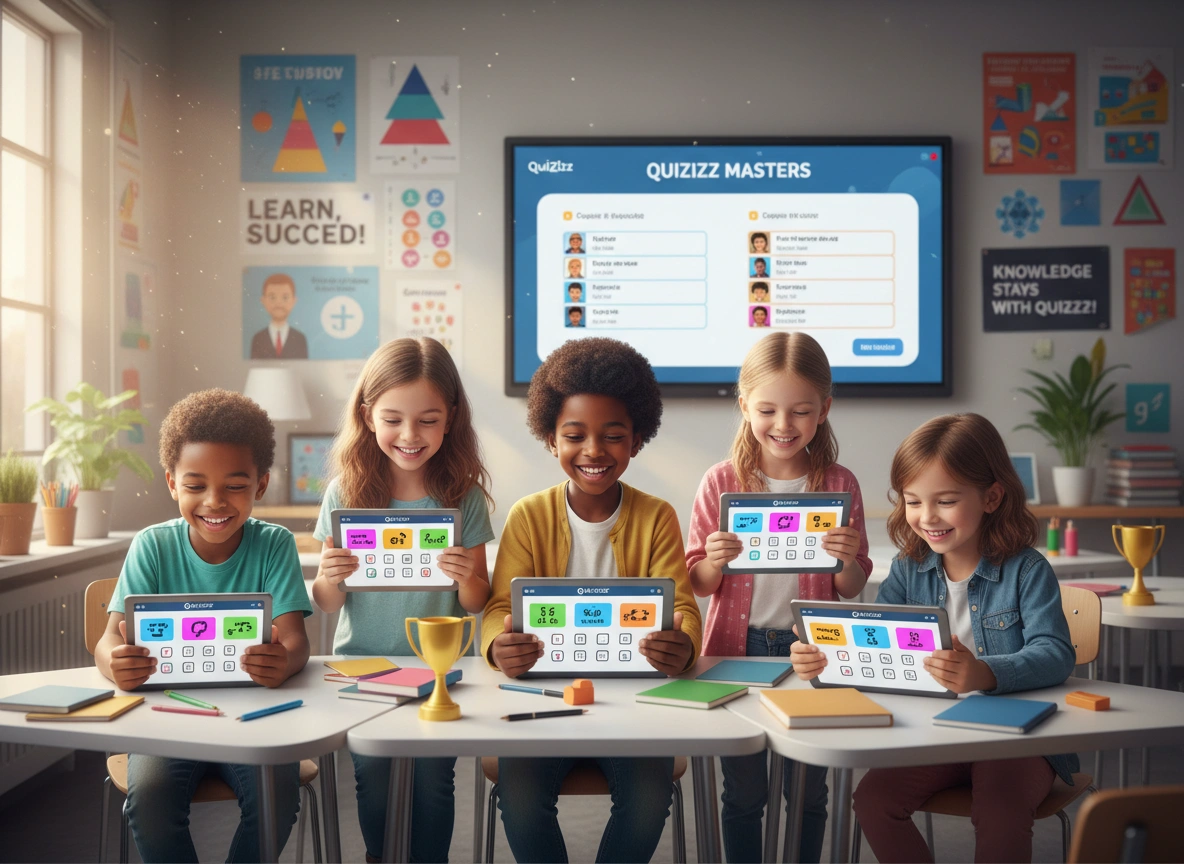
Teachers face a constant challenge: moving information from a student’s short-term memory into their long-term storage. We often see students who can pass a test on Friday but fail to recall the core concepts by the following Monday. This “learning loss” is a significant hurdle in education. However, platforms like Quizizz are changing the landscape of retention strategies. By leveraging principles of cognitive science—specifically active recall, spaced repetition, and gamification—Quizizz offers a dynamic environment where knowledge actually sticks.
The Science of Retention: Why Traditional Methods Fail
Before diving into the platform itself, we must understand why passive learning often falls short. Traditional lectures or reading assignments rely heavily on passive consumption. Students receive information, but they aren’t necessarily processing it deeply.
Cognitive psychology tells us that for a memory to be durable, it must be retrieved, not just reviewed. This is the “testing effect,” or active recall. When a student is forced to pull an answer from their brain rather than just recognizing it on a page, the neural pathways associated with that information strengthen.
This is where Quizizz excels. It transforms passive review into an active retrieval practice that is both engaging and data-driven.
Gamification: More Than Just Fun and Games
The most immediately recognizable feature of Quizizz is its gamified interface. But beneath the memes, leaderboards, and power-ups lies a powerful retention engine. Gamification in education isn’t about making learning “easy”; it’s about increasing motivation and focus, which are prerequisites for memory formation.
Reducing Anxiety to Improve Recall
High-stakes testing often triggers anxiety, which releases cortisol in the brain. High cortisol levels inhibit the hippocampus, the part of the brain responsible for memory formation and retrieval. Quizizz provides a low-stakes environment. Because students can retake quizzes and the immediate consequence of a wrong answer is simply a chance to try again (or use a “Redemption Question” power-up), the fear barrier lowers. When students are relaxed, their brains are more receptive to encoding new information.
Dopamine and the Reward Loop
The platform utilizes immediate rewards—points, leaderboard climbing, and engaging visuals. These triggers release dopamine, a neurotransmitter associated with pleasure and learning. When a student answers correctly and sees their rank rise, their brain receives a positive signal that reinforces the learning behavior. This creates a loop: answer question -> feel good -> want to answer more. This sustained attention is critical for deep learning.
Immediate Feedback: Correcting Misconceptions in Real-Time
One of the greatest detriments to knowledge retention is the “illusion of competence.” A student might leave class thinking they understand a concept when they actually harbor a misconception. If that misconception isn’t corrected until a graded exam a week later, the wrong information has had time to settle in.
Quizizz dismantles this issue through instant feedback.
The Feedback Gap
In a traditional worksheet setting, a student might complete 20 problems incorrectly. The teacher grades it that night and returns it the next day. By then, the student has disconnected from the task. The feedback is “cold.”
With Quizizz, the feedback is “hot.” As soon as a student selects an answer, they know if they were right or wrong. If they are wrong, the correct answer is displayed immediately. This instant correction prevents the brain from solidifying incorrect neural pathways. It allows the student to recalibrate their understanding in the exact moment of engagement.
Detailed Explanations
Quizizz allows educators to attach explanations to answers. When a student gets a question wrong, they don’t just see the right answer; they see why it is right. This transforms a simple assessment into a micro-learning moment, reinforcing the logic behind the facts rather than just the facts themselves.
Self-Paced Learning: Respecting Cognitive Load
Not all students process information at the same speed. In a live classroom Q&A, the quickest students often dominate, leaving slower processors behind. The slower students may disengage or panic, neither of which helps retention.
The “Player-Paced” Advantage
Quizizz offers a distinct “player-paced” mode. The questions appear on the student’s own device, and they answer at their own speed. This is crucial for cognitive load management. Students who need extra time to read and process can take it without the social pressure of the rest of the class waiting on them.
When students control the pace, they are more likely to engage in deep processing. They aren’t just guessing to keep up; they are thinking through the problem. This autonomy leads to better encoding of information.
Repetition Without Boredom: The Power of Replay
Spaced repetition is the gold standard for memory retention. It involves reviewing material at increasing intervals over time. However, asking students to re-read the same chapter three times is a recipe for boredom.
Quizizz facilitates repetition without the monotony. Because the questions can be shuffled, the answers randomized, and the game modes varied (e.g., Team Mode, Classic, Test), students can interact with the same material multiple times without it feeling repetitive.
Redemption Questions
A unique feature of Quizizz is the “Redemption Question.” If a student misses a question early in the game, the platform may offer them a chance to answer it again later. This is practically applied spaced repetition. The student failed to recall the information, received immediate feedback, and is then asked to retrieve it again a few minutes later. This “recall-feedback-recall” loop significantly strengthens the memory trace.
Data-Driven Instruction for Targeted Intervention
Retention isn’t just about what the student does; it’s about how the teacher responds. Quizizz provides robust backend analytics that give teachers a clear picture of retention gaps.
Identifying “Problem Questions”
After a session, teachers can see exactly which questions had the lowest accuracy rates. If 60% of the class missed question #5, the teacher knows immediately that the specific concept needs reteaching. This allows for “Just-in-Time” teaching interventions. Instead of reviewing everything, the teacher focuses only on the retention weak points, making class time more efficient and effective.
Longitudinal Progress Tracking
Teachers can use Quizizz for formative assessment over time. By assigning similar questions across different quizzes over a month, educators can track if retention is holding steady or decaying. If a concept taught in September shows low scores on a November review quiz, the teacher has concrete data to support a refresher lesson.
Practical Applications for Maximum Retention
To fully leverage Quizizz for retention, educators should move beyond using it solely as a Friday fun activity. Here are strategic ways to implement it:
- The Bell Ringer Review: Start class with a 5-question Quizizz covering material from the previous day, the previous week, and the previous month. This interleaving of topics prevents students from “dumping” old information to make room for new.
- The Exit Ticket: Use a short session at the end of class to consolidate the day’s learning. This forces students to actively recall what they just heard, initiating the consolidation process before they even leave the room.
- Homework as Practice: Assign “Homework” mode where deadlines are flexible. This allows students to practice in a low-stress environment at home, using their notes if necessary, which reinforces resourcefulness along with memory.
- Blind Kahoot Style (or Blind Quizizz): Introduce a new topic with a quiz. Students won’t know the answers, but the act of guessing primes the brain for the correct answer. When you teach the concept immediately after the question, their curiosity is piqued, and retention rates improve.
Conclusion
Retention is the bridge between temporary performance and permanent learning. While traditional study methods have their place, digital tools like Quizizz offer a supercharged alternative that aligns with how the brain actually learns. By lowering anxiety through gamification, enforcing active recall, providing immediate feedback, and allowing for self-paced processing, Quizizz does more than just test students—it teaches them.
For educators looking to combat the “forgetting curve,” integrating these interactive, data-rich strategies is not just an option; it is a pedagogical necessity.
Please vist this website for more info
