

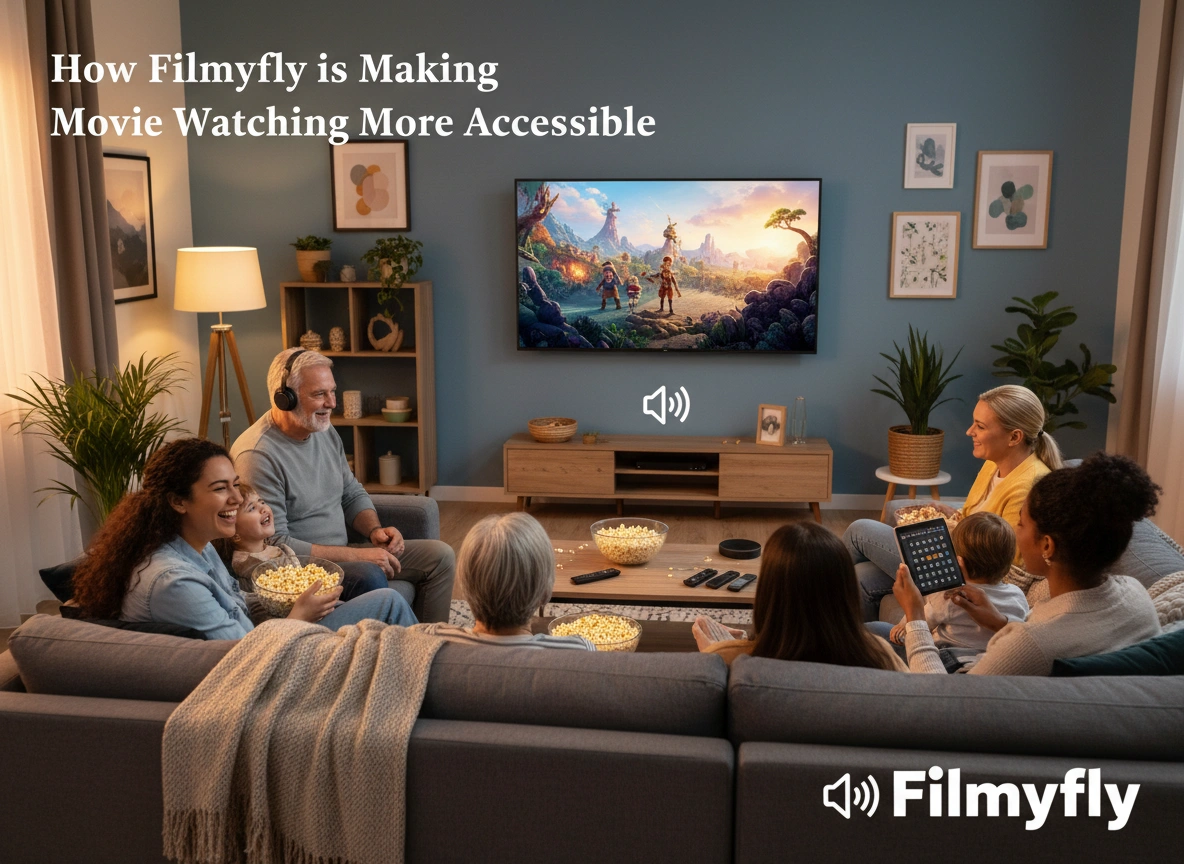
The global film industry produces thousands of movies annually, yet a significant portion of the world’s population remains underserved when it comes to accessing this content. High subscription costs, geographic restrictions, language barriers, and a lack of adaptive technologies often stand in the way. In this challenging landscape, Filmyfly has emerged as a disruptive force, reimagining how audiences connect with cinema.
Filmyfly isn’t just another streaming platform; it is a service built on the fundamental belief that storytelling belongs to everyone. By leveraging cutting-edge technology and adopting a user-centric philosophy, the platform is dismantling the traditional barriers that have long kept millions of potential viewers on the sidelines.
This article explores how Filmyfly is revolutionizing accessibility in entertainment. We will examine their innovative approaches to technology, their inclusive pricing models, and their dedication to serving diverse audiences through language support and adaptive features.
Breaking the Digital Divide: Optimized Streaming for All
One of the most significant hurdles to digital entertainment is internet connectivity. While 5G networks and high-speed fiber are standard in major metropolitan hubs, vast regions of the world still rely on 3G or unstable broadband connections. Standard streaming services often fail in these environments, resulting in endless buffering and poor video quality.
Adaptive Bitrate Technology
Filmyfly has invested heavily in proprietary compression algorithms that allow high-quality streaming even on low-bandwidth connections. Unlike competitors that simply lower the resolution to a pixelated blur when the signal drops, Filmyfly’s “Smart-Stream” technology optimizes the data packets. This ensures audio clarity and visual integrity remain stable, even at speeds as low as 500 Kbps. This feature is a game-changer for users in rural areas or developing nations where data is expensive and slow.
Offline Accessibility
Recognizing that constant connectivity isn’t a reality for everyone, Filmyfly has pioneered a robust offline viewing ecosystem. While downloading content is a standard feature on many platforms, Filmyfly’s “Data-Saver Download” mode is unique. It allows users to download full-length movies in highly compressed files that take up minimal storage space without sacrificing watchability. This is crucial for users with older smartphones that have limited internal memory, ensuring they don’t have to delete personal photos just to watch a film.
Pricing Models That Prioritize Inclusion
The subscription economy has created “subscription fatigue,” where the cumulative cost of entertainment becomes prohibitive for average households. Traditional platforms often lock their best content behind premium tiers, effectively segregating audiences based on income. Filmyfly challenges this model with a democratization strategy.
The “Pay-What-You-Can” Initiative
In select regions, Filmyfly is piloting a revolutionary “Pay-What-You-Can” model for indie and classic cinema. This tiered system suggests a price but allows users to pay a minimum nominal fee. This approach respects the value of the content creators while acknowledging the economic disparities of the audience. It invites users into the ecosystem who would otherwise resort to piracy due to financial constraints.
Micro-Transaction Flexibility
Instead of forcing users into monthly commitments they might not fully utilize, Filmyfly offers a granular micro-transaction system. Users can rent access to a specific movie for a 48-hour window at a fraction of a monthly subscription cost. This “sachet pricing” mirrors successful FMCG strategies in emerging markets, making premium entertainment accessible to those with daily or weekly wage structures rather than monthly salaries.
Bridging the Language Gap
Language should never be a barrier to a good story. However, many streaming giants focus their localization efforts primarily on major global languages like Spanish, French, or Mandarin. Filmyfly is taking a more granular approach to linguistic inclusivity.
Hyper-Localization of Subtitles
Filmyfly’s “Local-Lingo” project collaborates with regional translators rather than relying solely on AI translation, which often misses cultural nuances. They provide subtitles in regional dialects and indigenous languages often ignored by mainstream media. By supporting languages like Quechua, Swahili, and various Indian regional dialects, Filmyfly validates these cultures and invites speakers of these languages to enjoy global cinema in their mother tongue.
Real-Time AI Dubbing
For audiences who struggle with reading subtitles—whether due to literacy levels or visual impairment—Filmyfly is rolling out beta features for real-time AI dubbing. This technology overlays a synthesized voice track in the user’s preferred language over the original audio. While still evolving, this feature promises to open up foreign cinema to millions of people who find subtitles distracting or difficult to follow.
Designing for Disabilities: True Inclusivity
Accessibility means nothing if the platform itself is unusable for people with disabilities. The World Health Organization estimates that over 1 billion people live with some form of disability. Filmyfly has integrated accessibility into its UI/UX design from the ground up, rather than treating it as an afterthought.
Enhanced Audio Descriptions
Standard audio descriptions narrate actions on screen during pauses in dialogue. Filmyfly takes this further with “Immersive Audio,” which uses spatial audio cues to help visually impaired users understand the environment of the scene. If a character walks from left to right, the footsteps pan across the audio spectrum. This sensory detail provides a richer, more cinematic experience than simple narration.
Customizable Interfaces for Neurodiversity
Users with dyslexia or cognitive processing differences often find cluttered streaming interfaces overwhelming. Filmyfly offers a “Focus Mode” that strips away auto-playing trailers, flashing banners, and complex carousels. It presents a simplified, high-contrast list view with dyslexia-friendly fonts. This creates a calm, navigable environment where the user is in control, reducing anxiety and making the selection process seamless.
Voice-First Navigation
For users with mobility impairments who cannot easily use a touchscreen or mouse, Filmyfly has integrated comprehensive voice navigation. Unlike standard voice search which just finds titles, Filmyfly’s voice command system allows users to navigate menus, change settings, and control playback entirely hands-free. Commands like “rewind 30 seconds” or “turn on high contrast mode” are processed locally on the device for speed and privacy.
Curating for Cultural Diversity
Accessibility is also about representation. If users don’t see themselves reflected in the content, they feel alienated. Filmyfly’s content acquisition strategy is aggressively diverse.
The “Global Voices” Program
Filmyfly actively acquires rights to films from underrepresented regions. Instead of filling their library with Hollywood blockbusters, they curate collections from African, Southeast Asian, and Middle Eastern cinema. They categorize these films not as “foreign” but by genre and theme, placing a Nigerian thriller right next to an American one. This subtle UI choice democratizes content discovery, encouraging users to step outside their cultural bubbles.
Community-Driven Curation
To ensure relevance, Filmyfly employs community ambassadors from various cultural backgrounds to curate playlists. This human touch ensures that the content highlighted is culturally significant and timely, rather than just algorithmically popular. It helps users navigate the vast library and find stories that resonate with their specific cultural context.
Conclusion
Filmyfly is proving that accessibility in the streaming world is not just a regulatory checkbox; it is a vital business strategy and a moral imperative. By addressing the technical limitations of internet infrastructure, rethinking pricing models, embracing linguistic diversity, and designing for disabilities, they are building a platform where everyone is invited.
The future of entertainment is not about exclusive content for the few, but inclusive experiences for the many. As Filmyfly continues to innovate, they set a new standard for the industry. They remind us that the magic of movies lies in their ability to connect us, and that connection is only powerful when the screen is open to all. Whether through a low-bandwidth connection in a remote village or a high-contrast interface for a neurodiverse viewer, Filmyfly is ensuring the show goes on—for everyone.
Please vist this website for more info
